The Battle that Destroyed the Pentagram
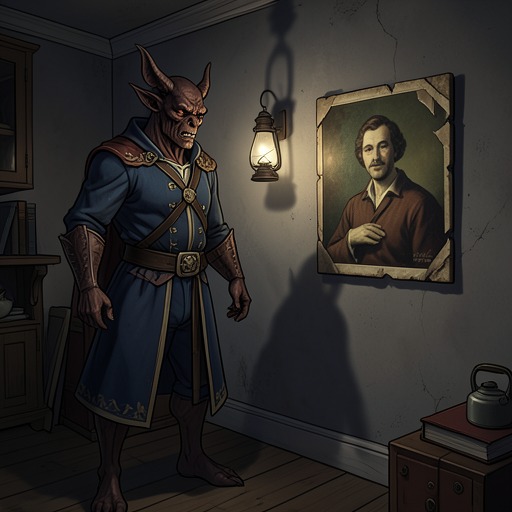
The Reincarnated Demon King's Host Just Wants to Live in Peace, But the Hero Won't Leave Him AloneThe Battle that Destroyed the Pentagram is the decisive military and emotional catastrophe of Malthios’s early reign. What begins as a routine assault on a small mortal settlement becomes the encounter that destroys the Pentagram as a living group, kills most of its members, and leaves Malthios carrying the memory of their deaths. Its significance reaches beyond the battlefield: years later, the recollections of Kamil, Aym, Torq, and Foras return as accusations against the immortality that had made their future seem unlimited, while the same history helps explain the grief and severity surrounding Malthios’s later identity as the Demon King.
Causes and Battlefield Context
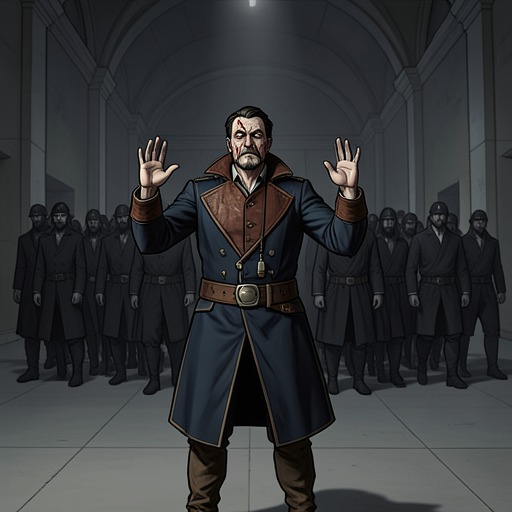
The battle occurs after the Pentagram has been placed in command of a large battalion composed of Demonkin and Novices. Malthios serves as Commander, while the other members act as his seconds. The unit has already proved highly effective, destroying towns and cities and penetrating farther into mortal territory than any comparable force. That record makes the mission appear familiar rather than exceptional. The target is a small, unassuming town barely larger than a village, and the attack begins under the assumptions of a campaign the demons have carried out many times before.
The mortals, however, refuse the expected pattern of flight and terror. They are a mixture of races and are not individually more powerful than the attackers, yet they fight back with axes, short swords, arrows, and modest magic from several mages. Their resistance carries strategic meaning before its cause is understood: something has given them the resolve to hold their ground. Several Demonkin and at least one Novice fall in the opening violence, and the apparently minor settlement becomes the site of a battle whose scale is defined less by the town itself than by the force driving its defenders.
The Hero’s Appearance and the Failed Retreat
Malthios recognizes the turning point when a figure enters the field whose presence can be felt across the battlefield. The figure is not especially tall, but has the body of a hardened warrior and a radiance resembling sunlight beneath the skin. The sword in the figure’s hand is better made than any weapon previously seen in the town. Aym identifies the figure as the Hero, transforming the encounter from a local clash into a confrontation between the established demonic order and the champion capable of challenging it.
Malthios responds by ordering the troops to intensify their attack, but Kamil immediately grasps the danger and argues that the group must flee. Her judgment rests on a known hierarchy of power: only a Demon King can stand against a Hero. Malthios nevertheless chooses to remain behind while Kamil, Aym, Torq, and Foras withdraw the battalion. He directs them to call the retreat and get the troops to the transport circle within five minutes, with flight as a last resort if the situation becomes desperate.
The withdrawal is organized through the distinct skills of the Pentagram. Torq sounds the horn, its note cutting through the battle noise. Aym begins opening the transport circle, their magic lighting the golden ember of their eyes. Kamil prepares throwing knives and uses wind to control their movement. Foras gathers sparking mana around his hands, while Torq stands beside him with his great war hammer. The troops move toward the circle, but the mortals rally, and most of the Novices converge on the Hero in an attempt to obscure the figure’s radiance.
The attempted retreat collapses when a blast of magical energy tears across the battlefield. Demons fall like scattered leaves. Malthios braces himself, as does Torq, with Foras clinging to him for support; Aym is hurled into a tree, causing the transport circle to wink out, and Kamil is thrown sprawling before catching herself. The Novices are not merely defeated: they are killed, their bodies charred before dissolving into shadows. With the escape route gone and the Hero temporarily nowhere in sight, the surviving members have no safe withdrawal left to them.
Destruction of the Pentagram
Malthios pulls Kamil to her feet and calls for Aym, intending to carry the injured member away. The battle then assumes the suspended, almost unreal quality of a fatal recognition. A figure appears beside Aym, and the Hero’s sword pierces their body. Malthios knows that body intimately, having shared it in sexual union, and therefore experiences the wound not as an impersonal casualty but as the destruction of someone whose strength and certainty he knows from within. He tries to scream, but no sound emerges.
The Hero charges again. Torq answers by making the ground react to his magic, sending roots and rocks exploding upward, while Foras adds a rain of ice shards. The Hero evades both attacks and cuts through Torq and Foras. Torq throws himself in front of Foras in an attempt to shield him, turning their final exchange into an act of protection as well as a failed counterattack. The pair’s deaths complete the collapse of the group’s physical defense and leave Malthios exposed as the last effective combatant.
Malthios recovers from his paralysis and attacks with a sword whose motion sends a whip of blue fire through the air. The Hero blocks the strike and closes the distance. Malthios surrounds himself with fire and manages to withstand the Hero’s blows for a time, but the disparity in speed and strength is unmistakable. A strike catches him in the shoulder and throws him backward, with his wings barely keeping him from falling. The battle has become not a contest he can win but a narrowing choice between death and flight.
Kamil makes that choice for him. When the Hero’s attack leaves Malthios vulnerable, wind catches beneath his wings and hurls him upward and away. Kamil has raised her hands to summon it, sacrificing her position to save him. She smiles at him with the same wide, genuine expression associated with their first meeting, and the Hero’s sword cuts through her neck while she is still smiling. Her death gives the retreat its final meaning: Malthios survives because Kamil deliberately sends him out of danger, but survival is purchased through the annihilation of the people he was meant to lead.
Escape, Grief, and Historical Consequences
Malthios’s instincts carry him away from the battlefield at great speed. He flies blindly for a long time before landing on a mountainside ledge after the sun has set. His shoulder continues to ache even though it should have healed long before, making the injury a physical remainder of a battle that has exceeded ordinary demonic endurance. He falls to his knees and only gradually realizes that his face is wet with tears.
Those tears are made of blood. Demons weep differently from mortals, and the text treats demonic crying as the equivalent of a wound: grief has forced Malthios into a condition his body and nature are not meant to sustain. He looks into the dark sky and screams, an ending that refuses military triumph, strategic explanation, or consoling closure. The commander who ordered the attack and the retreat is left not with a victory, but with the knowledge that the entire Pentagram has been destroyed while he alone escapes.
The later account of Malthios’s memory makes the battle a long-term source of remorse. Immortals had arrogantly assumed that they possessed endless years, but Malthios comes to regret not using the fifty years after ascension more fully. The bright memories that return to him include Kamil’s laugh, Aym’s soft smile when they first woke, Torq’s warmth as he crushed the group in a hug, and Foras’s dry humor. These recollections are eventually replaced by darker memories, so that the battle does not remain a single past event; it becomes the organizing wound through which Malthios experiences the passage of decades and the cost of his former certainty.
Later Reinterpretation and Narrative Significance
The battle’s importance is confirmed by Malthios’s later actions and by the public consequences of his survival. Much later, when he speaks of the destruction of the Demon Fortress, he acknowledges that he destroyed the fortress and everyone there, while allowing that lesser demons and demon-created monsters may still remain. He also states that there is no longer any need for a Hero. That declaration gives the earlier battle a grim structural echo: the former victim of the Hero’s assault ultimately becomes the figure capable of ending the organized demonic stronghold, but the power to do so is inseparable from the losses that shaped him.
The event also clarifies why Malthios’s later trial cannot be reduced to a simple question of guilt or innocence. He is eventually sentenced to life in prison as the Demon King, while Healer Theo Bladefoot is cleared of all charges. The decision follows a public intervention by the people of Leafel, who use a mirror spell to demand Theo’s release, and Luc’s insistence that the Hero’s duty to kill the Demon King does not determine when the killing must occur. The legal aftermath therefore contrasts with the Pentagram battle’s absolute logic: on the battlefield, the Hero’s sword decides life and death in an instant; in the trial, responsibility, protection, and future coexistence remain open to judgment.
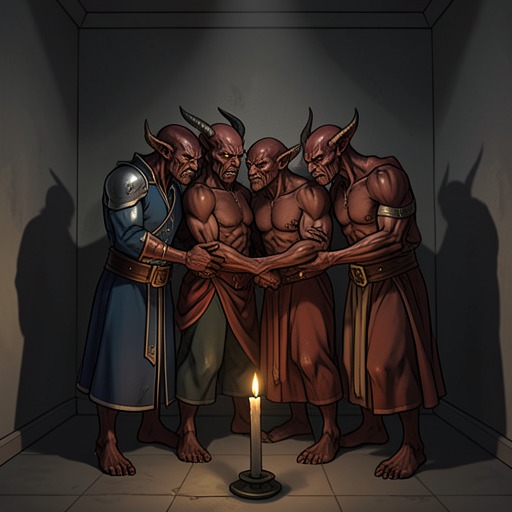
As a plot event, The Battle that Destroyed the Pentagram combines military defeat, sacrifice, recognition, and irreversible loss. Its value shift is stark: Malthios begins with command, an effective battalion, and the confidence of a familiar campaign, then loses the transport route, his forces, his companions, and his certainty that immortality provides time enough for everything to be repaired. The Pentagram’s destruction is thus both a tactical defeat and the end of a chosen family. Its aftermath lives in Malthios’s blood tears, his decades of regret, and the later struggle to decide whether a Demon King must be destroyed or whether the cycle that produced such devastation can be interrupted.